Residential service
Cabinet refinishing that looks like a new kitchen.
Sound cabinet boxes do not need replacing. A.G. Williams Painting Company provides cabinet refinishing for homeowners in Westchester County, NY, the lower Hudson Valley, and Fairfield County, CT, using labeled removal, degreasing, bonding primer, and a controlled sprayed finish. It is a lower-disruption way to change the look of a kitchen.
- Labeled systemEvery door, drawer, and hinge tracked
- Bonding primerBuilt for daily cabinet wear
- Sprayed finishEven surface, no brush marks
- 5-year warranty on workmanshipResidential painting work
What matters
The finish lasts because of what happens before it.
A cabinet finish fails at the prep stage, not the paint stage. Every door, drawer, face, and touch point is tracked from removal through reinstall, and your written scope makes those steps visible before work starts.
Label and remove
Doors, drawers, and hardware are labeled before they come off, so every piece returns to the opening it came from and closes the way it did.
Degrease and sand
Kitchen surfaces carry years of cooking residue. Degreasing and sanding let the new finish bond instead of sitting on top of the old one.
Bonding primer and finish
A bonding primer and finish system are matched to how hard your cabinets get used, so the doors near the stove and sink hold up like the rest.
Clean reinstall
Faces and hardware go back cleanly, hinges are adjusted, and we walk the touch points with you before the kitchen returns to service.
Your project
How cabinet refinishing projects run
Walkthrough
A field supervisor reviews cabinet condition, finish direction, grain visibility, and how your kitchen is used day to day.
Color and sheen
You choose the color and sheen before work starts, and we show you how both will read on your own doors.
Written proposal
Prep, finish system, cure times, and the access you keep during the project are delivered in writing.
Controlled finishing
The kitchen is contained, and removable doors and drawer fronts are brought to A.G. Williams' shop for painting. The labeled system keeps every piece accounted for.
Reinstall and review
Everything returns to its labeled opening, hardware is adjusted, and we walk the touch points with you. If something is not right, we come back and fix it.
Inside the work
Expert preparation and application
Every kitchen gets the same six steps, from containment through the final touch-up review.
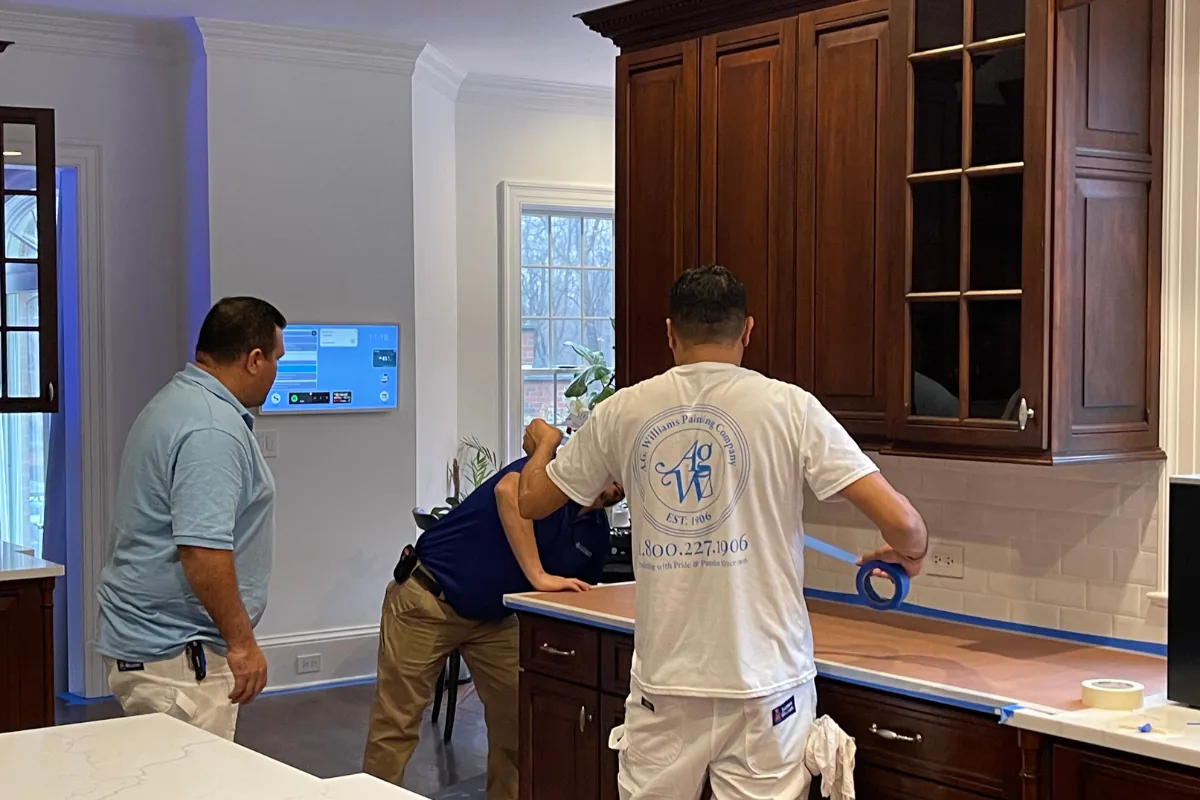
Containment
Counters, floors, appliances, and openings are covered and sealed so dust stays in one place and the rest of the house stays usable.
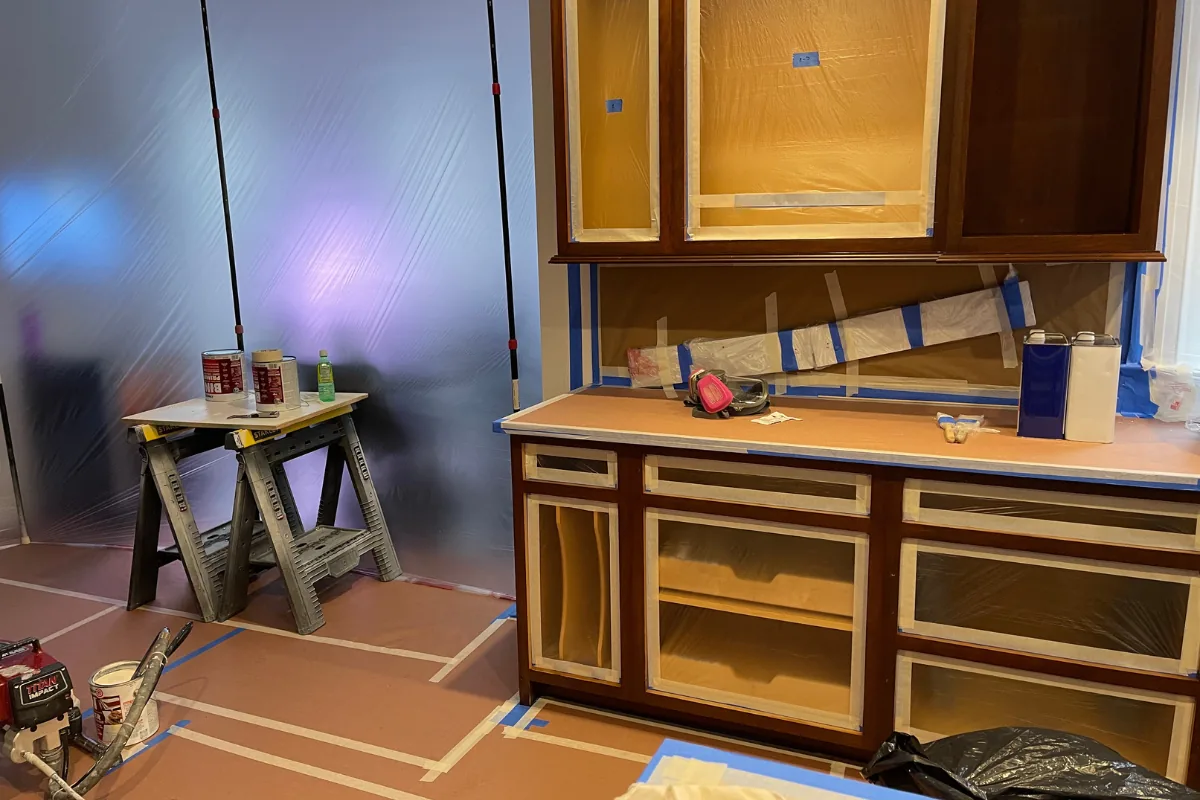
Disassembly
Doors, drawers, and hardware are labeled and removed so every piece returns to its exact opening. Removable faces are finished at A.G. Williams' shop.
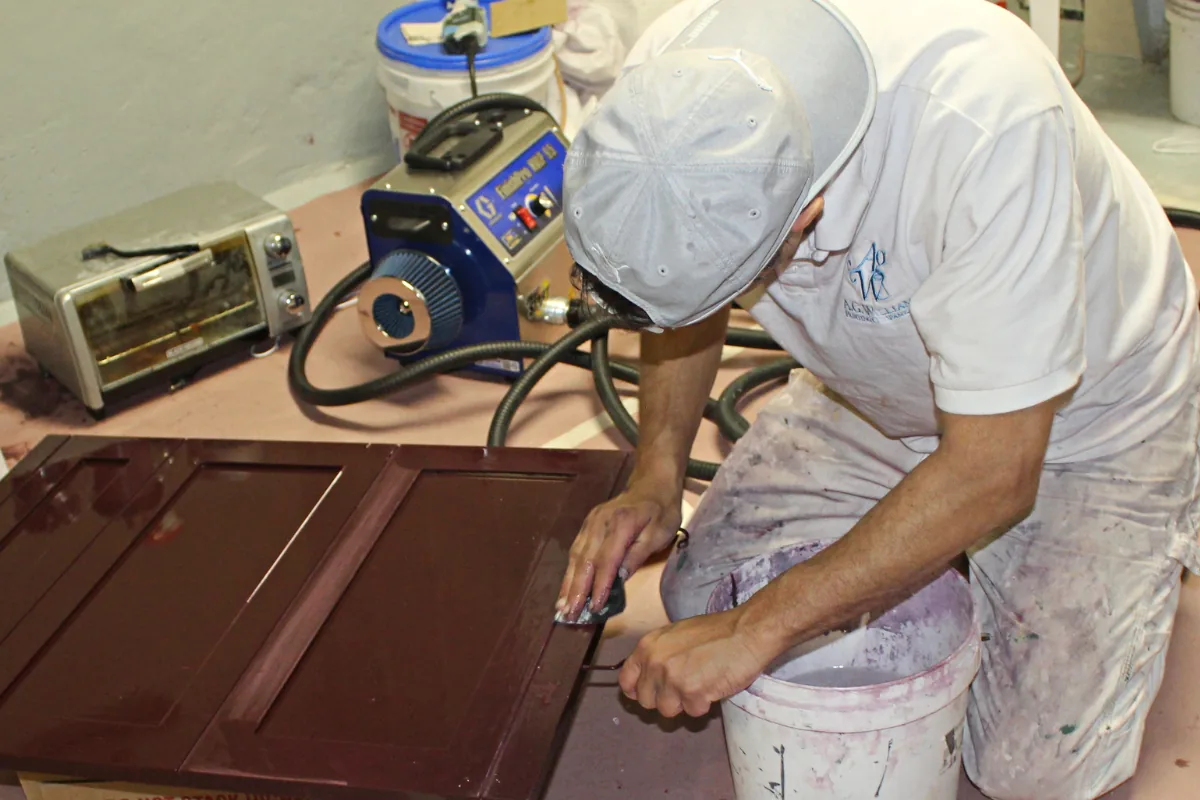
Deep clean
Every face is degreased to strip years of cooking residue. Skip this and the finish sits on grease instead of wood.
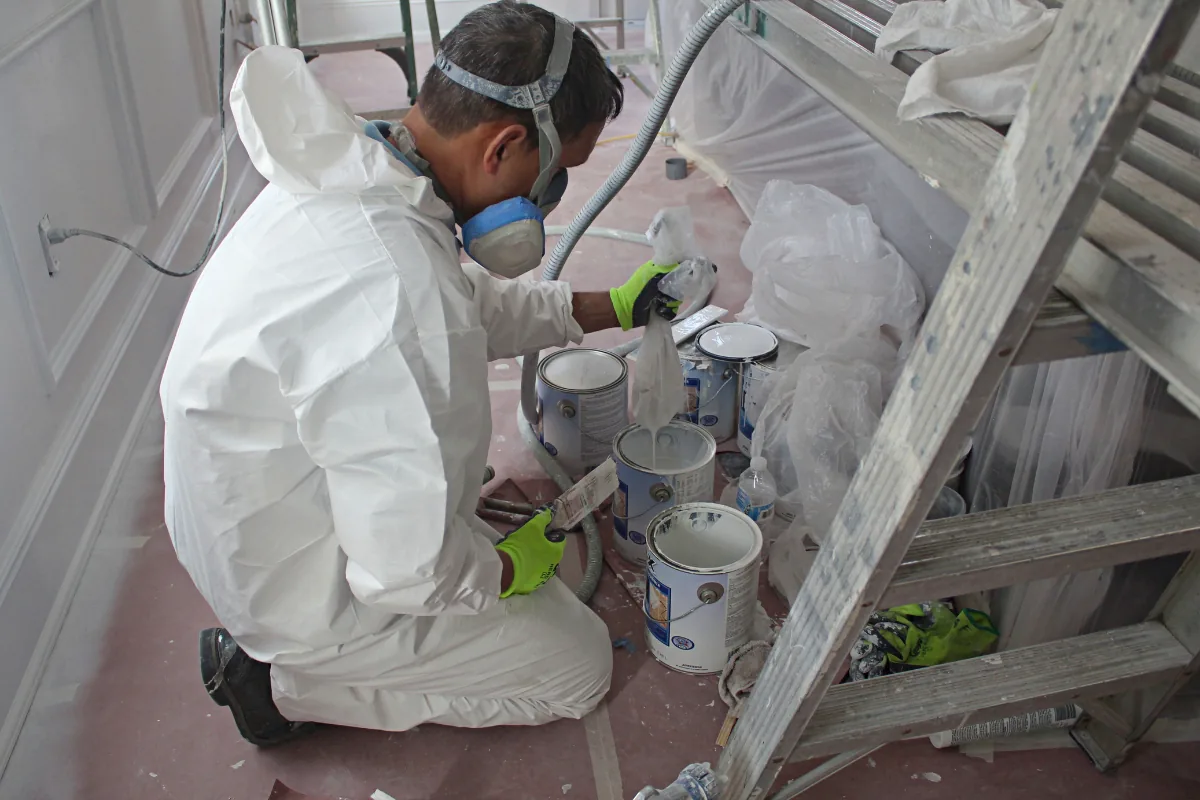
Prep and prime
Surfaces are sanded to break the old sheen, then sealed with a bonding primer. This step decides how long the finish holds.
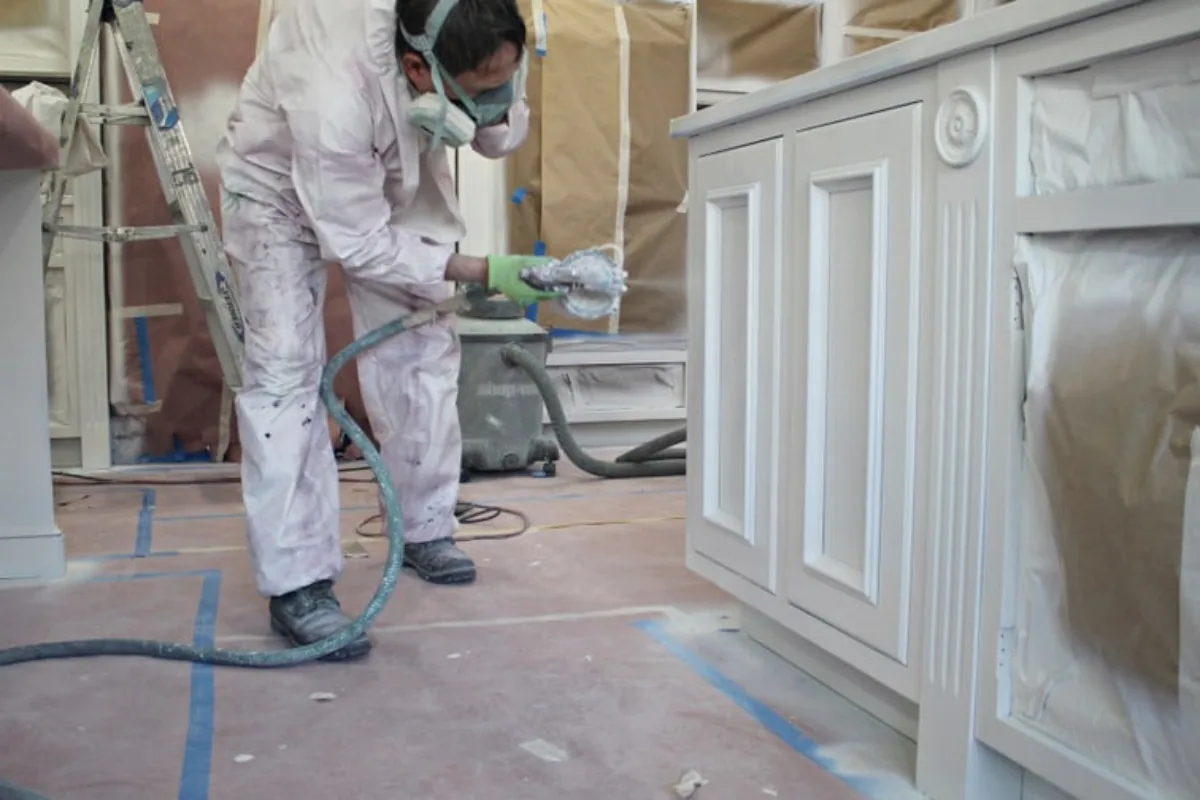
Finish coats
A cabinet-grade finish is sprayed for an even surface without brush marks. Fixed frames are sprayed or hand-finished depending on the kitchen.
Reinstall and review
Doors and drawers return to their labeled openings, hardware is adjusted, and we walk the touch points with you before the kitchen goes back into service.
Cabinet refinishing is not only a color decision. How long the finish holds depends on grease removal, sanding, the primer system, and cure time before the doors go back on. A written scope should make those conditions visible before work begins.
Watch the process
See a worn kitchen come back finished
Follow the six steps A.G. Williams uses to contain the kitchen, remove and label the doors, degrease, prime, spray, and reinstall.
If the video does not load, watch it directly on YouTube.
What the video covers
- Containment. Counters, floors, appliances, and openings are covered and sealed so dust stays in one place and the rest of the house stays usable.
- Disassembly. Doors, drawers, and hardware are labeled and removed so every piece returns to its exact opening. Removable faces are finished at A.G. Williams' shop.
- Deep clean. Every face is degreased to strip years of cooking residue. Skip this and the finish sits on grease instead of wood.
- Prep and prime. Surfaces are sanded to break the old sheen, then sealed with a bonding primer. This step decides how long the finish holds.
- Finish coats. A cabinet-grade finish is sprayed for an even surface without brush marks. Fixed frames are sprayed or hand-finished depending on the kitchen.
- Reinstall and review. Doors and drawers return to their labeled openings, hardware is adjusted, and we walk the touch points with you before the kitchen goes back into service.
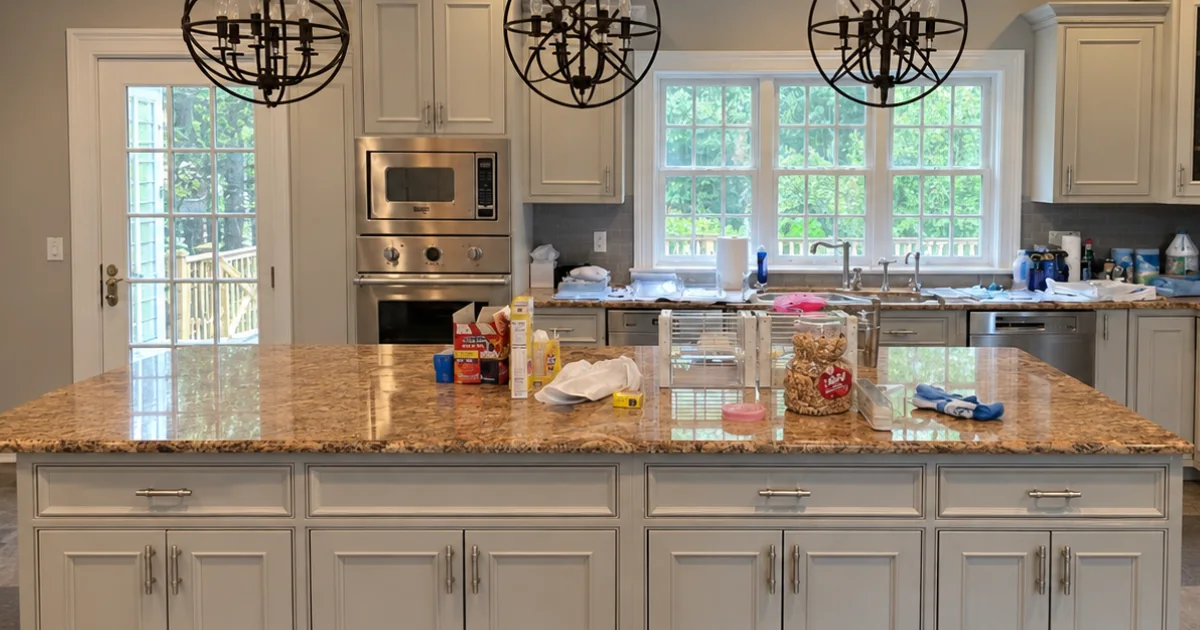
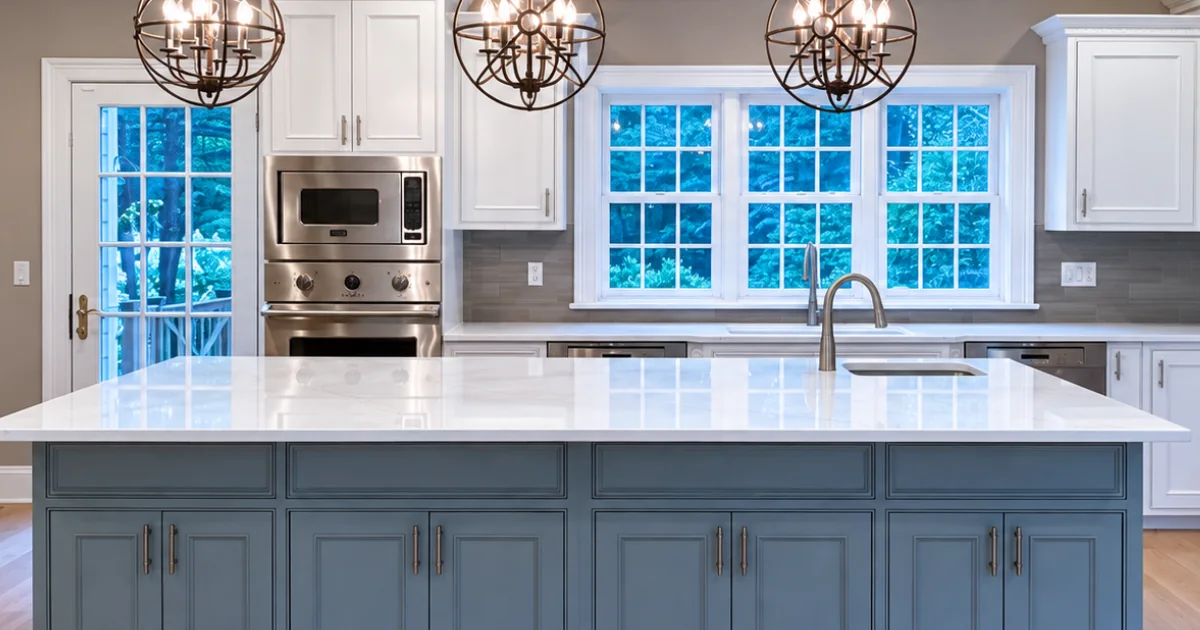
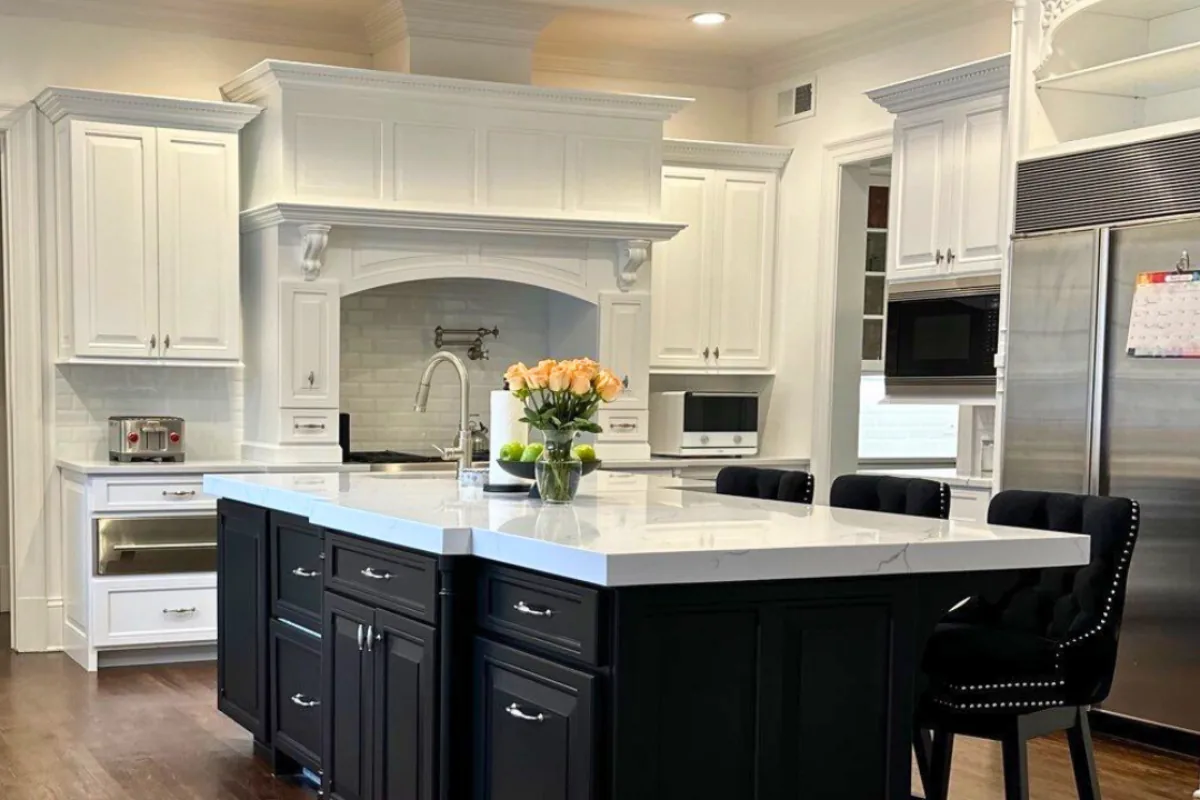
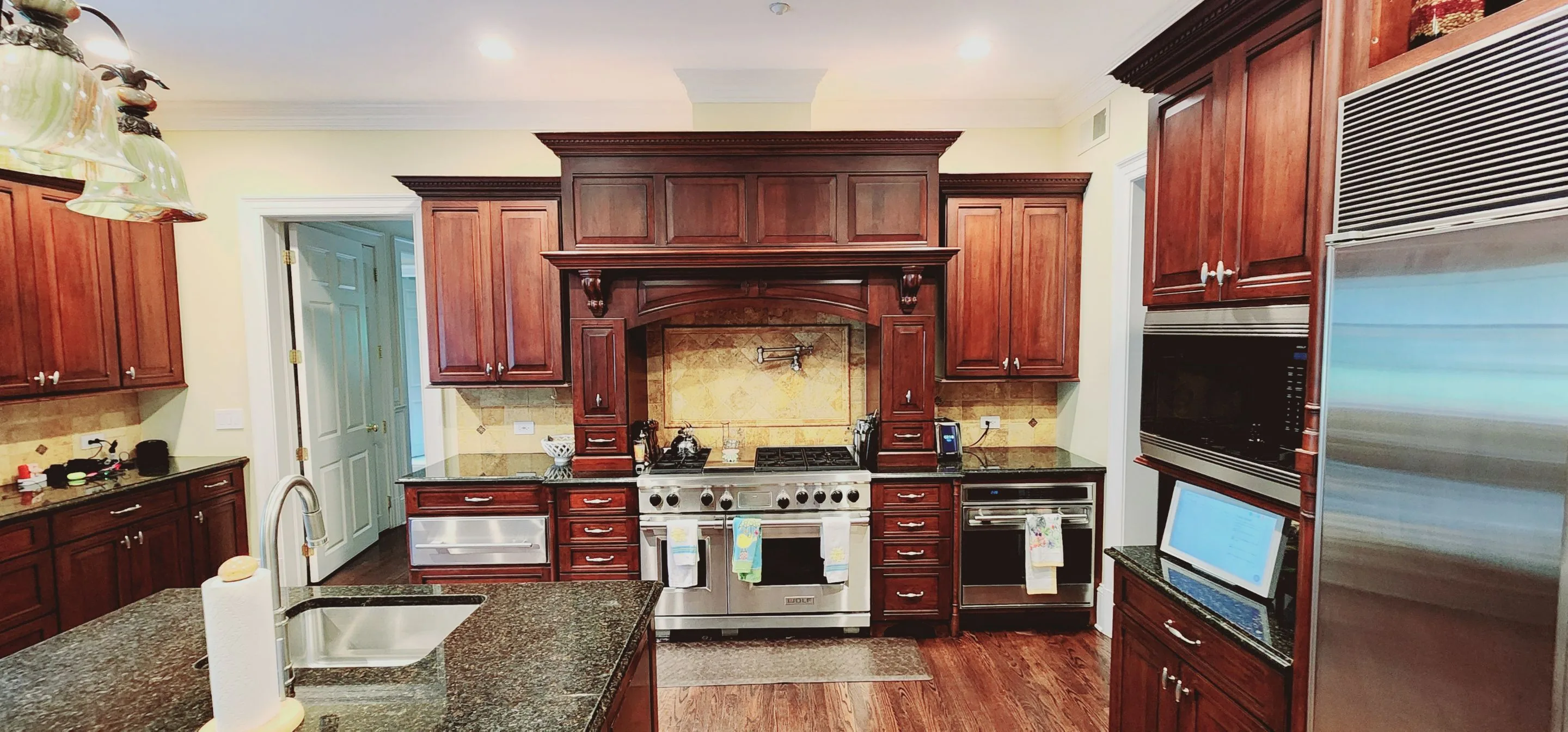
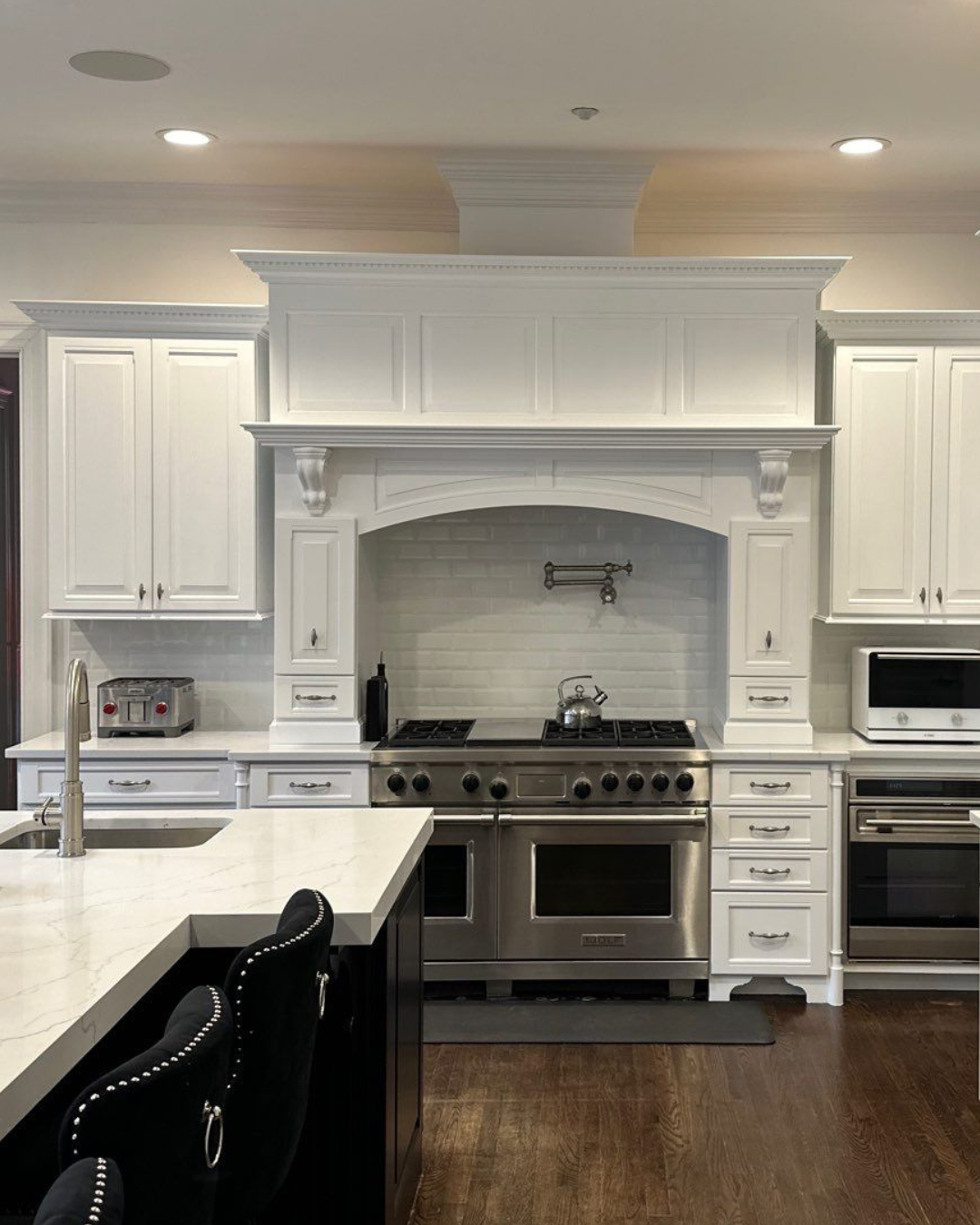
Same cabinets.
New kitchen.
The same boxes, the same layout, and the same footprint. Doors were labeled, degreased, primed, and sprayed, with the island carried in a deeper color.
Start your project
A written scope before the first door comes off.
A field supervisor reviews cabinet condition, finish direction, cure time, and the access you keep, then puts scope and pricing in writing. 0%* financing on residential projects over $5,000 is available through Wisetack.
- Request a Proposal
- Payment optionsAsk about financing→
- Before your projectCabinet refinishing preparation→
- After your projectCabinet refinishing post-care→
All financing is subject to credit approval. Terms may vary. Payment options through Wisetack are provided by Wisetack's lending partners.
EPA-Lead Safety
Kitchen in a home built before 1978? Ask about the lead-safe plan.
Cabinet work means sanding. A.G. Williams is an EPA Lead-Safe Certified firm, and we explain containment, dust control, and cleanup before any surface is opened up.
Cabinet refinishing questions
Is refinishing better than replacing kitchen cabinets?
When the cabinet boxes are sound, refinishing gives you a new finish for far less cost and disruption than replacement. Replacement makes sense when the boxes are failing or the layout needs to change. We tell you honestly at the walkthrough if your cabinets are not good candidates.
Can you paint stained wood cabinets white?
Yes. Stained wood cabinets are degreased, sanded, and sealed with a bonding primer before the finish coats go on. Deep grain can still read slightly through a light finish, so we show you what to expect on your own doors before you choose a color.
What kinds of cabinets can be refinished?
Solid wood, wood veneer, and previously painted cabinetry refinish well. Laminate and thermofoil doors depend on their condition and how the surface is holding. We review your cabinets at the walkthrough and tell you which doors will take a finish and which will not.
Do you spray or brush kitchen cabinets?
Doors, drawer fronts, and removable parts are sprayed in a contained setting, which produces an even surface without brush marks. Fixed faces and frames are sprayed or hand-finished onsite depending on the kitchen.
Can I use my kitchen while the cabinets are being refinished?
In most kitchens you keep partial use of the room. The written scope states the containment plan, cure times, and the access you keep day to day, so you know what to expect before work starts.
How long does the finish hold up?
A bonding primer and a finish system matched to cabinet wear are what make the finish last. Cure time matters as much as dry time, which is why the scope tells you when doors go back on and when the kitchen returns to normal use. See the warranty page for what is covered.
Where does A.G. Williams refinish cabinets?
A.G. Williams refinishes cabinetry across Westchester, the Bronx, Rockland, Putnam, and Dutchess counties in New York, and Fairfield County, Connecticut. See the towns we cover.